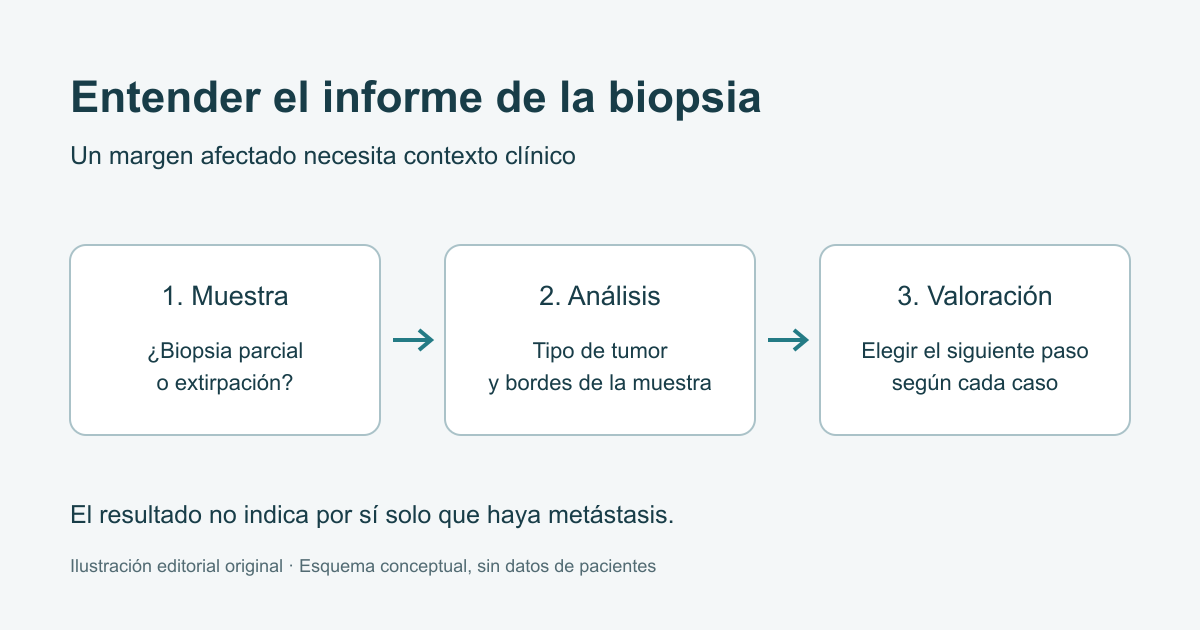
Reading “involved margins” in a pathology report can be worrying. The phrase describes what was seen at the edge of the tissue sample examined. On its own, it does not mean that cancer has spread to other organs, nor does it determine treatment without knowing the diagnosis and how the sample was obtained.
What is the margin of a tissue sample?
The margin is the edge of the tissue that has been removed. If the report describes tumour cells at that edge, some of the lesion may remain in the skin. The interpretation depends on whether only part of the lesion was sampled for diagnosis or an attempt was made to remove it entirely.
A partial biopsy aims to establish a diagnosis and is not always intended to remove the tumour. An involved edge in a diagnostic sample therefore does not automatically mean treatment has failed. After an intended complete excision, however, this finding may require consideration of further treatment. The decision requires review of the report and examination of the area.
When might Mohs surgery be considered?
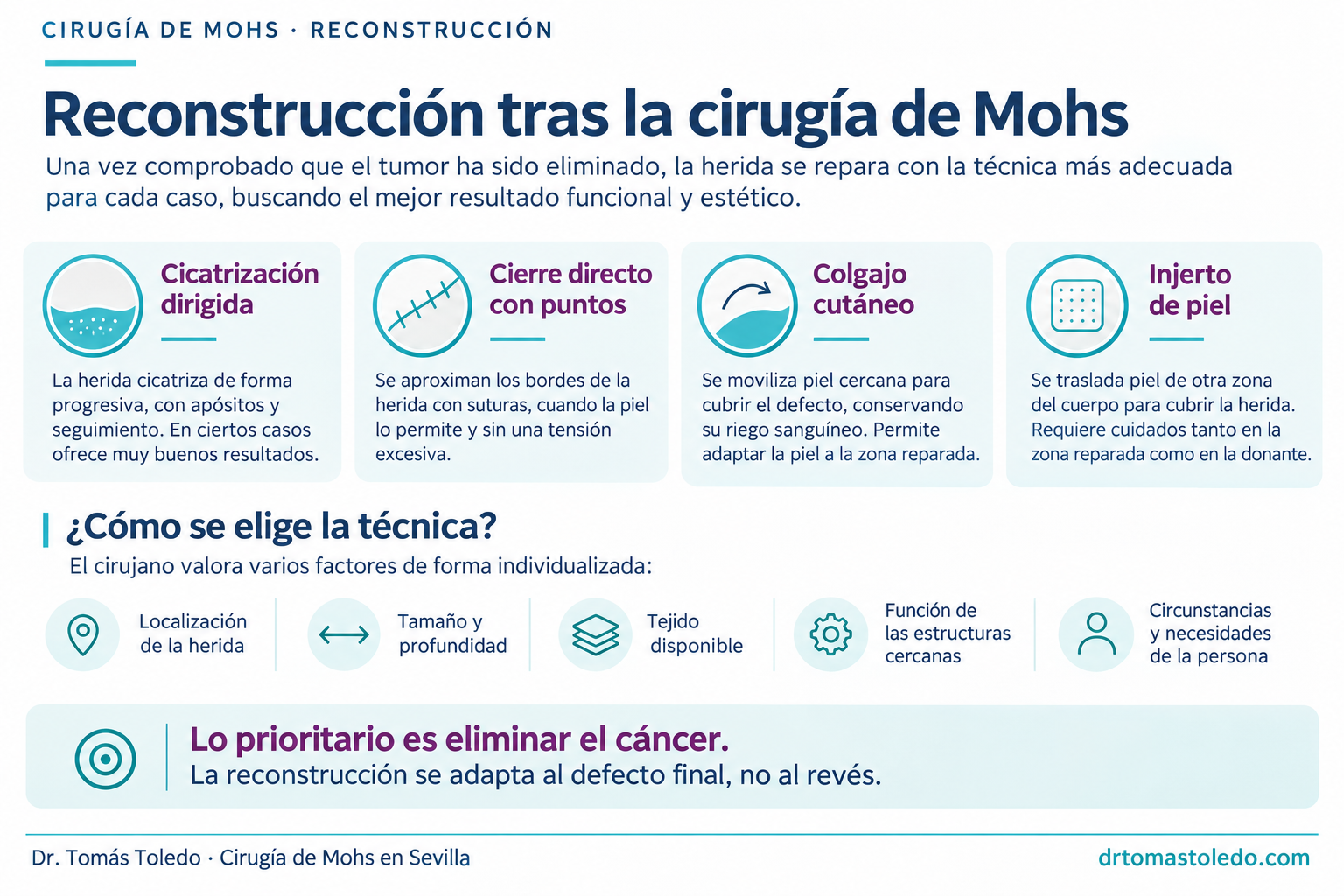
For selected high-risk basal cell and squamous cell carcinomas, Mohs allows tissue to be removed in stages and its margins examined. If tumour remains, more tissue is removed from the relevant area. This control can be particularly useful when preserving healthy tissue matters or the tumour has a higher risk of returning.
The diagnosis, location, clinical borders, recurrence and microscopic features influence the decision. An involved margin alone does not make Mohs necessary. Further conventional excision or other options may also be considered depending on the case. These explanations mainly concern basal cell and squamous cell carcinoma; melanoma requires a specific assessment.
Read about how Mohs surgery is performed and skin cancer surgery.
Useful questions for your appointment
Was the biopsy intended to diagnose the lesion or remove it completely?
What is the exact diagnosis, and which risk features are present?
Which margin is involved: the side, the deep margin or both?
Which treatment is recommended, and why? What alternatives are available?
What follow-up will I need afterwards?
Bring the pathology report and details of the previous procedure. A technique cannot be chosen from a single phrase in the report.
Does the skin still need checking after treatment?
Yes. Treatment does not remove the possibility of recurrence or of developing another skin cancer. The frequency of reviews is tailored to the tumour, medical history and other personal factors. For basal cell carcinoma, the AAD recommends annual checks to detect recurrence or new tumours; some patients need more frequent visits.
If you would like an assessment, you can request an appointment. This article provides general information and does not replace individual interpretation of your report.
Sources
NCI: Skin Cancer Treatment (PDQ), health professional version. Treatment options and margin control.
AAD: basal cell carcinoma. Diagnosis and treatment, including Mohs surgery.
AAD: basal cell carcinoma clinical guideline. Risk stratification and follow-up.
Read more about follow-up after Mohs surgery or a second opinion about skin cancer. See the professional profile of Dr Tomás Toledo Pastrana, dermatologist and Mohs surgeon. Original editorial update: 10 November 2026.